Debt collection agencies, also referred to as field collection services, play an important role in collecting overpayments and optimizing loans. In India, where financial transactions range from personal loans to corporate loans, working in conjunction with a professional company simplifies the collection process while preserving client relationships through direct transactions in conjunction with their creditors, these companies take a professional approach to resolving overpayments. They help businesses collect outstanding payments efficiently while complying with legal regulations and maintaining smooth operations.
Below, we provide a comprehensive overview of field collection and the operations of debt collection agencies in India.

A debt collection agency specializes in recovering unpaid bills from individuals or businesses using techniques like field collections and advanced tools such as AI, analytics, and machine learning. These agencies help minimize financial losses, save businesses from the hassle of chasing payments, and ensure legal compliance. Tech-powered and innovation-fuelled, they offer smart, tailored solutions for diverse geographies in India, ensuring seamless and efficient debt recovery. By outsourcing debt collection to experts, companies can focus on growth while leaving the complexities of recovery in capable hands.


Debt collection is a critical process for businesses and individuals seeking to recover unpaid debts. There are various types of debt collection services tailored to different kinds of debts, each serving a unique purpose. Here’s an overview of the most common types:
1. Commercial Debt Collection
Commercial debt collection focuses on recovering outstanding payments owed by businesses to other businesses or corporations. Often, these debts result from unpaid invoices for goods or services. These are specialized in handling high-value debts, including negotiating payment plans or leveraging legal actions to recover funds. Advanced technology, including AI-driven analytics and tracking systems, enhances efficiency in recovering business debts. We integrate these advanced methods to empower businesses with seamless and efficient B2B debt recovery solutions, ensuring trust and growth every step of the way.
2. Consumer Debt Collection
Consumer debt collection deals with recovering debts owed by individuals to businesses or financial institutions. These debts may arise from credit card payments, loans, or retail purchases. The debt collection agency specializes in reaching out to consumers through reminders, phone calls, letters, and even field collection when necessary. In consumer debt cases, agencies must operate in strict accordance with local regulations to protect consumer rights. Through clear communication and persistent follow-ups, agencies help restore cash flow by recovering overdue payments while maintaining consumer relations.
3. Legal Debt Recovery
When standard methods of debt collection prove unsuccessful, businesses often resort to legal debt recovery to reclaim outstanding dues. This process may involve filing lawsuits, obtaining court judgments, and enforcing them through asset seizures or wage garnishments. Debt collection agencies specializing in legal recovery engage experienced legal teams to initiate and manage proceedings, ensuring strict compliance with local laws. We integrate expert legal strategies with advanced technologies to optimize debt recovery processes. This approach is typically a last resort for recovering large commercial debts or consumer payments when traditional methods fail.

Collaborating with a professional debt collection agency brings significant benefits for businesses looking to recover unpaid debts swiftly and effectively, all while adhering to legal requirements. With expertise in commercial, consumer, and legal debt recovery, these agencies use advanced tools and strategies to boost recovery success rates. By handling the complexities of debt collection professionally, businesses can protect their relationships, maintain reputations, and focus on driving growth without the stress of overdue payments.
1. Enhanced Recovery Rates
Partnering with a debt collection agency boosts the chances of recovering outstanding debts like EMIs, loans, and premiums. With specialized tools and expert techniques, we ensure faster revenue generation and higher success rates, making outsourced debt collection more effective than in-house efforts, especially for commercial collections.
2. Time and Resource Savings
Managing debt collection can drain time and resources, diverting focus from core business activities. By outsourcing to us, we handle the complexities, letting you concentrate on your business. Our professional debt collection services save you time and ensure efficient management of outstanding payments.
3. Expertise in Debt Collection Process
With years of expertise, we specialize in managing debt collection using proven methods like payment plan negotiations and field collection techniques. Our team manages both consumer and commercial debts efficiently, refining skills to improve recovery outcomes while ensuring professionalism throughout the process.


4. Compliance with Legal Standards
We prioritize compliance in all debt recovery actions, ensuring strict adherence to legal regulations, especially in countries like India with strict recovery laws. Whether handling consumer or commercial debt, we stay updated on the latest regulations to avoid violations, protecting both our reputation and avoiding legal penalties.
5. Effective Field Collection
In more extreme cases, field collections (face-to-face meetings) can often expedite debt collection. We use the standardized method to communicate directly with debtors, allowing them to resolve overdue accounts faster. Collecting debts through local collections is especially useful in catastrophic or high-value cases, improving the chances of repayment.
6. Improved Cash Flow
By recovering outstanding debts promptly, we help businesses maintain healthy cash flow. Unpaid debts often disrupt a company’s financial stability, hindering growth opportunities and cash flow. By using our debt recovery services, businesses can secure overdue payments quickly, keeping operations running smoothly and sustaining financial health.

7. Reduced Internal Burden
The process of chasing overdue payments can create an internal burden that distracts from other important business functions. By outsourcing debt collection to us, we take on the time-consuming, often contentious task, allowing you to concentrate on customer relationships and core business strategies.
8. Access to Legal Recovery Options
When routine collection methods fail, we as a debt collection agency can escalate the matter to legal action. With our expertise in legal debt recovery, we take steps like filing lawsuits or garnishing wages to recover larger or problematic debts. Legal debt recovery is often a last resort but can be essential for large or problematic debts.
9. Increased Chances of Collecting Difficult Debts
Some debts can be particularly difficult to recover, especially when the debtor is uncooperative or evasive. We handle the toughest debt recovery cases with the right skills, tools, and resources. Using tactics like field collection and professional negotiation, we recover debts that internal teams may find challenging.
In India, debt collection is governed by two primary laws:
- The SARFAESI Act, 2002, facilitates the enforcement of security interests by secured creditors like banks and financial institutions, allowing them to take possession of collateral, sell assets, and recover debts without court intervention.
- The RDDBFI Act, 1993, establishes Debt Recovery Tribunals (DRTs) to expedite debt recovery cases exceeding Rs 20 lakh. These tribunals help resolve disputes between creditors and borrowers.
In addition, provisions under the Indian Contract Act (1872), the Limitation Act (1963), and the Consumer Protection Act (2019) are also relevant to debt recovery in India.
Adhering to these legal frameworks is essential for lenders to avoid legal issues and penalties while executing debt collection services.
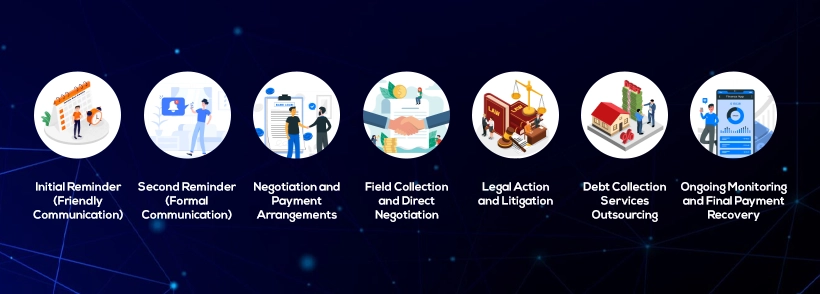
Flamingo Infinite streamlines the debt collection process by utilizing a systematic and structured approach that ensures legal compliance and maximizes recovery efficiency. Specializing in B2B debt collection, Flamingo Infinite integrates the power of AI, machine learning, and advanced analytics to enhance the process, providing smart, data-driven solutions that optimize results.
By utilizing innovative technology and expertise, Flamingo Infinite offers a professional, ethical, and results-oriented approach that not only focuses on timely recovery but also preserves vital client relationships. Below are the stages of the debt collection process.
1. Initial Reminder (Friendly Communication)
The first step in the debt collection process is usually an informal reminder sent to the debtor through a phone call, email, or letter. It starts with a lesser formal communication helps remind the lender of their overpayment. There is an opportunity to settle the debt amicably, and brokers often give the borrower a short grace period to pay off outstanding debts. This is an effective first step in the debt collection process, as it resolves matter that don’t make the process worse.
2. Second Reminder (Formal Communication)
If the debt is still not settled after the initial reminder, the next step involves a more formal communication, typically in the form of a registered letter or a more direct phone call. During this stage, businesses clearly articulate the legal implications of non-payment and may add late fees to emphasize the urgency. This stage also marks the beginning of using debt collection agency services if the debt is persistently unpaid, thereby escalating the situation for more effective collection.
3. Negotiation and Payment Arrangements
If the debtor responds and acknowledges the debt, the debt collection agency services may offer the option for negotiations. This stage of the debt collection process involves working out a mutually agreeable payment plan, such as installment options or a settlement for less than the full amount owed. In some cases, the debt collection agency may act as a mediator, simplifying the conversation and making it easier for both parties to reach a resolution without needing legal intervention.
4. Field Collection and Direct Negotiation
If previous methods have failed, a debt collection agency can turn to field collections, where the employees personally visit the debtor to negotiate or demand payment. Field collection is often used for higher value debts or more persistent cases. This face-to-face interaction can often push debtors to resolve their financial obligations more promptly.
5. Legal Action and Litigation
In the event that all non-legal avenues are exhausted, legal action may be initiated as part of the debt recovery efforts. This involves filing lawsuits or obtaining court orders under relevant legal frameworks such as The Negotiable Instruments Act, 1881, The Recovery of Debts Due to Banks and Financial Institutions Act, 1993 (RDDBFI Act), and The Insolvency and Bankruptcy Code, 2016 (IBC). These actions may include measures like seizing assets or garnishing wages, ensuring compliance with applicable laws and maintaining a structured approach.
6. Debt Collection Services Outsourcing
Companies choose to outsource debt collection to specialized companies. This decision allows companies to focus on their core operations while management deals with the challenges of debt collection. Outsourcing also allows companies to ensure that the process has been complied with properly and ethically, as the debt collection agency’s services comply with debt collection laws in their respective jurisdictions.
7. Ongoing Monitoring and Final Payment Recovery
Once the debt is collected, it is important for companies to monitor their debt collection services outsourcing activities. This ensures that all steps of the process are properly followed and that payments continue as scheduled. Companies also closely monitor any changes in borrower behaviour to avoid preventing any future defaults.
In conclusion, collaborating with a professional debt collection agency significantly improves your business’s ability to recover outstanding debts while ensuring compliance with legal standards. This also helps maintain a consistent cash flow, allowing companies to focus on core operations and growth.
Flamingo Infinite empowers businesses with innovative, technology-driven debt collection strategies. By blending data insights, proven methodologies, and sector-specific expertise, we craft customized solutions that maximize recovery rates while fostering strong client relationships.
Partner with Flamingo Infinite for a compliant, efficient, and reliable recovery journey that secures your financial health and operational excellence.
Can I outsource my debt collection to an agency?
Yes, businesses can outsource their debt collection efforts to a professional debt collection agency. Outsourcing ensures that experts handle overdue payments, allowing businesses to focus on their core activities. By opting for debt collection services outsourcing, companies benefit from specialized knowledge and compliance expertise in managing both consumer debt collection and commercial debt collection effectively.
How does a debt collection agency in India maintain compliance?
A debt collection agency in India follows strict guidelines and regulations to ensure compliance with laws such as the Fair Debt Collection Practices Act (FDCPA), and debt collectors must ensure that their recovery methods comply with these rules. Debt collection agencies in India are well-versed in local regulations and work to prevent illegal recovery practices, maintaining ethical standards throughout the process.
What is the purpose of field collection?
Field collection serves the purpose of engaging directly with debtors face-to-face to negotiate payment resolutions. It is particularly useful for collecting from individuals or businesses where other communication methods, such as emails or phone calls, have not been effective. This hands-on approach in debt recovery can increase the chances of successful outcomes, especially in difficult or large-value cases.
What legal actions can a debt collection agency take if recovery fails?
If a debt collection agency cannot recover the debt through traditional collection methods, they may suggest legal options or settlement negotiations. In more severe cases, the agency could pursue legal debt recovery methods, which may include litigation or working with specialized legal teams to pursue the debt through formal channels like the Debt Recovery Tribunal.
How much does it cost to hire a debt collection agency in India?
The cost of hiring a debt collection agency typically varies depending on the amount of debt, the complexity of the case, and the agency’s fee structure. Fees can be structured as a percentage of the recovered amount or a flat rate for services. Debt collection services outsourcing often proves to be cost-effective since agencies use specialized tools and experienced professionals for efficient debt recovery.
What are the consequences of non-compliance of debt collections in India?
Non-compliance with debt collection in India can lead to severe penalties for both the business and the agency involved. Violating regulations, such as engaging in harassment, using misleading practices, or failing to honor debtor rights, can result in fines, legal action, or damage to the business’s reputation. It’s crucial for agencies to adhere to the laws governing debt collection services to avoid these negative consequences.
What factors determine the success of a debt collection agency?
The success of a debt collection agency is influenced by factors such as the agency’s experience, its ability to negotiate effectively, knowledge of debt recovery laws, and the quality of its collection’s tools and techniques. A good debt collection agency will adapt its strategies to the nature of the debt and debtor, utilizing both traditional and modern methods, including field collection and legal procedures to maximize recovery success.
Can a debt collection agency impact my business’s reputation?
When selecting a professional debt collection agency, it is essential to choose one with a strong reputation for ethical conduct and legal compliance. If handled poorly, debt recovery could harm a business’s public image. However, reputable agencies follow best practices and use respectful communication, ensuring that the recovery process does not negatively impact your business’s reputation.